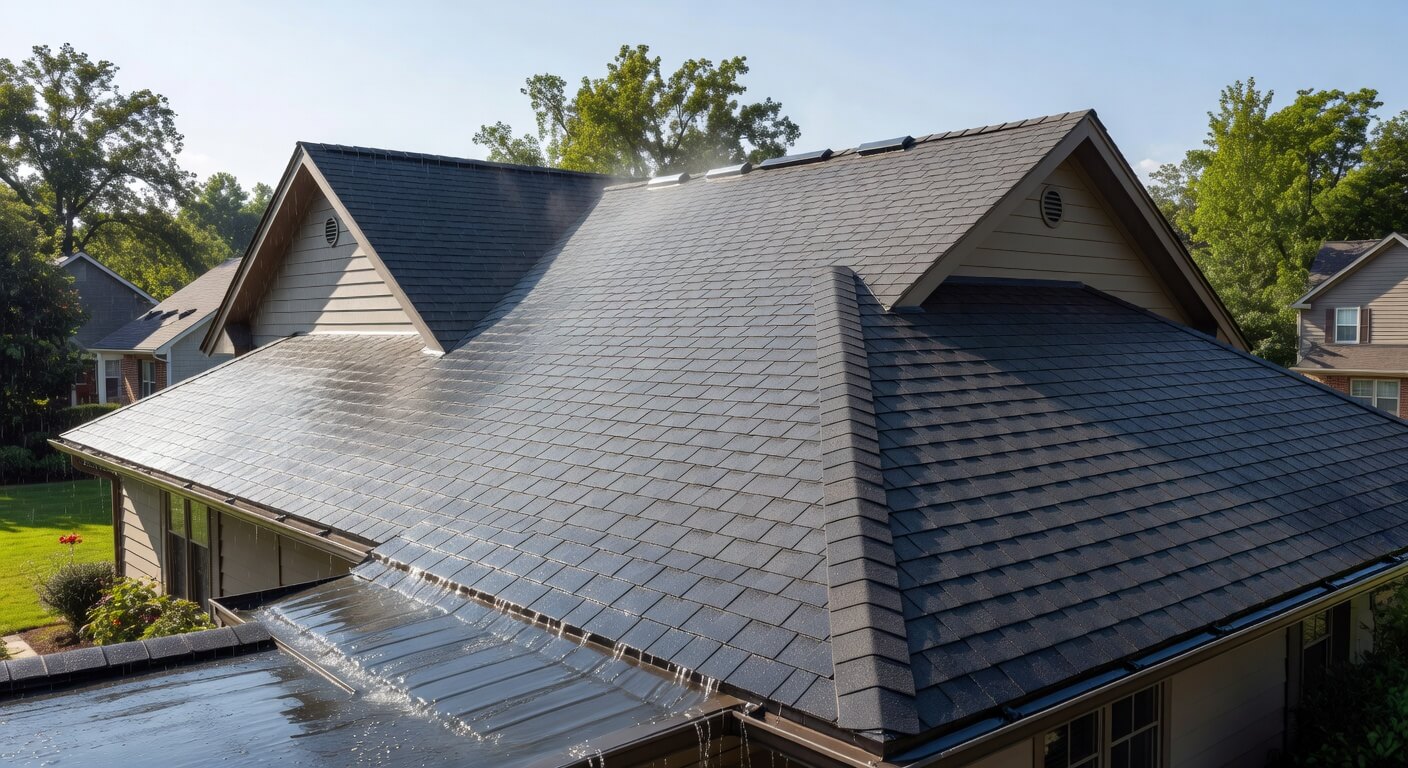
• Sloped roofs help Central Virginia homes shed rain faster, reduce standing moisture, and better handle summer storms before small problems turn into bigger repairs.
• This guide explains the benefits of sloping roof design, simple inspection steps, and the most common DIY mistakes to avoid when checking your roof.
• You’ll also learn how attic airflow, shingle condition, flashing, and roof pitch work together to protect your home during hot, wet weather.
Why Sloped Roofs Matter in Summer
When summer heat settles over Central Virginia, roof problems can show up fast. A roof that sheds water well and handles heavy sun can help protect your home from damage and stress. That is why the benefits of sloping roof design deserve attention before small issues grow into costly repairs.
Sloped roofs are built to move rain away from the home more quickly than flatter roof lines. They also help reduce the chance of standing water, which can wear down roofing materials over time. For homeowners in our area, that matters when summer storms bring sudden downpours and strong wind.
We often see people wait until a leak starts before they think about roof design. By then, the damage may already have spread into the attic, ceiling, or walls. If you want to understand how the benefits of sloping roof design can support your home, it helps to act before the season puts your roof under more pressure.
At D.L Williams Roofing, we know how much Central Virginia weather can test a roof during the hottest months. Heat, moisture, and storm activity all work against weak roofing systems. That is why planning ahead can make a real difference for long-term home protection, especially when you need dependable support from our residential roofing team.
How Sloped Roofs Help Protect Your Home
One of the biggest benefits of sloping roof design is better water movement. When rain rolls off the roof instead of sitting on it, the home is less likely to face slow damage from trapped moisture. This design also helps lower the risk of leaks in areas where water might otherwise collect.
A sloped roof can also support airflow in the attic when it is built and vented the right way. Better airflow can help reduce trapped heat, which is especially useful during a Central Virginia summer. That extra comfort may also help limit wear on roofing parts that face long periods of sun exposure.
We believe roof design should work with the weather, not against it. A good slope can help your roofing system handle summer storms, heavy rain, and long stretches of heat more effectively. For many homeowners, the benefits of sloping roof design become most clear when a roof is built to handle local conditions from the start.
How to Make the Most of a Sloped Roof
????️ Step 1: Check How Water Moves Across the Roof
Watch how rainwater drains during and after a storm. If water pools or drains too slowly, the roof may need attention.
???? Step 2: Clear Debris from Roof Surfaces and Gutters
Leaves, twigs, and dirt can block water flow and create extra wear. Keeping surfaces clear helps the slope do its job and reduces moisture buildup.
???? Step 3: Inspect Shingles or Other Roofing Materials
Look for curling, lifting, cracked, or missing pieces. Damage in these spots can weaken the roof’s ability to shed water and protect the home.
????️ Step 4: Check Attic Ventilation
A sloped roof works better when hot air can move out of the attic. Good airflow can help lower heat buildup and support the roof during summer months.
????️ Step 5: Look at Flashing Around Roof Edges and Openings
Flashing helps seal places where water may sneak in, such as valleys, chimneys, and vents. If it is loose or worn, water can get under the roofing materials.
???? Step 6: Review the Roof Pitch
The angle of the roof affects how quickly water moves off the surface. Steeper slopes usually shed rain faster, which is one reason many homeowners value the benefits of sloping roof design.
☀️ Step 7: Watch for Heat Stress Signs
Sun exposure can dry out materials and make them wear faster in summer. Discoloration, brittleness, or surface wear can be signs that the roof is under too much stress.
???? Step 8: Bring in a Roofing Professional When Needed
If you spot damage, unsafe areas, or signs of hidden leaks, do not wait. A trained roofing team can check the roof, explain what is happening, and help prevent a small problem from spreading.
Common Mistakes to Avoid
Many DIY roof projects go wrong because people rush through the basics. A sloped roof may look simple from the ground, but small errors can lead to bigger problems once summer rain or heat hits. Knowing what to avoid can help you protect your home and your budget.
The most common mistakes usually happen when homeowners skip key checks or guess at what the roof needs. These errors can hide damage, weaken drainage, or leave the attic exposed to heat and moisture. Careful planning makes it easier to use the benefits of sloping roof design the right way.
- ⚠️ Mistake 1: Ignoring Water Flow Patterns
This happens when someone assumes the roof drains well just because it is sloped. Poor runoff can still happen if gutters are blocked or the roof has low spots, so always check how water actually moves across the surface. - ❌ Mistake 2: Skipping the Debris Cleanup
Leaves and dirt often build up fast in summer, especially after storms. People skip cleaning because it seems minor, but that debris can trap moisture and slow drainage, so regular cleanup matters. - ???? Mistake 3: Overlooking Shingle Damage
Small cracks, lifted edges, or missing shingles may not look urgent at first. Homeowners miss these signs because the damage is not always easy to see, but even small openings can let water in, so inspect the surface carefully. - ⚠️ Mistake 4: Forgetting About Attic Airflow
This mistake often comes from focusing only on the outside roof. If heat stays trapped in the attic, roofing parts can wear down faster, so make sure vents and airflow are checked too. - ❌ Mistake 5: Delaying Professional Help
People often wait because they hope the problem will stay small. That delay can let leaks or heat damage spread, so get help early when you see signs that the roof is not performing as it should.
Frequently Asked Questions
What are the main benefits of sloping roof design?
Yes, the main benefits of sloping roof design include better water runoff, less standing moisture, and improved protection during heavy rain. It can also help roofs handle heat and weather changes more effectively over time.
Why are sloped roofs useful in Central Virginia?
Yes, sloped roofs are useful in Central Virginia because they help move rain away quickly during summer storms. They also work well in hot weather by supporting better attic airflow when the roof system is built correctly.
How does a sloped roof help prevent leaks?
Yes, a sloped roof helps prevent leaks by reducing the chance of water sitting on the surface for long periods. When water drains away faster, there is less time for it to work under shingles or flashing.
Can roof pitch affect energy use in summer?
Yes, roof pitch can affect energy use in summer when it supports better attic ventilation and heat movement. A roof that helps hot air escape can make it easier for the home to stay more comfortable.
How do I know if my sloped roof needs attention?
Yes, signs like missing shingles, water stains, clogged gutters, or heat buildup in the attic can mean the roof needs attention. If you notice any of these issues, it is smart to have the roof checked before the damage spreads.
Final Thoughts on Roof Design
The benefits of sloping roof design are easy to see when summer weather brings heavy rain, strong sun, and extra wear to a home. A roof that sheds water well and supports airflow can give your house stronger protection during the hottest part of the year. Taking a closer look now can help you avoid bigger repairs later.
At D.L Williams Roofing, we believe the right roof design should fit both the home and the climate. When you want trusted help in Central Virginia, follow us on social media.


