
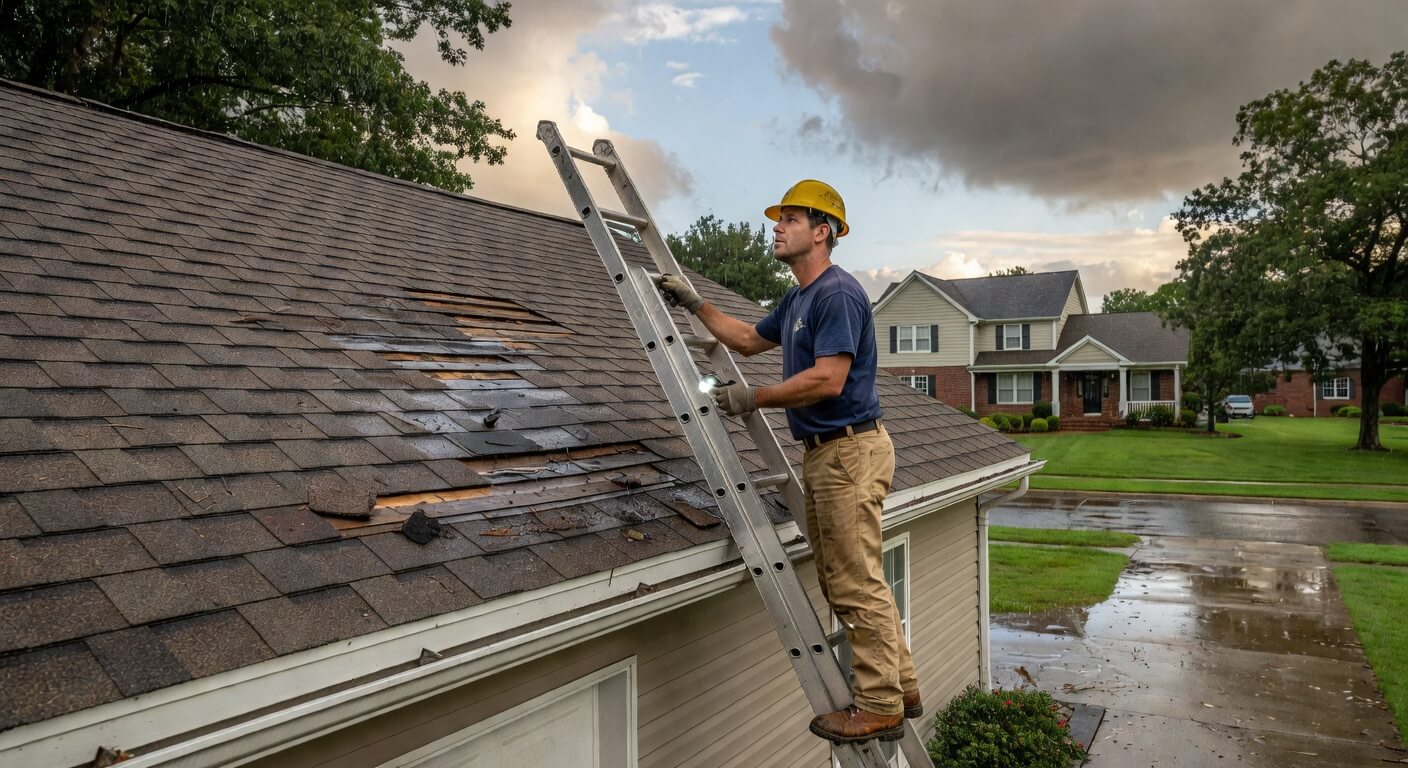
• Act fast after storm damage to prevent small roof issues from turning into costly repairs.
• Learn the key signs to look for, including missing shingles, leaks, flashing damage, and gutter problems.
• Follow practical steps for a safe, smart response that supports the storm damage restoration process.
Act Fast After a Summer Storm
When a strong summer storm hits Chesterfield, roof problems can show up fast. Missing shingles, lifted flashing, and hidden leaks can start causing trouble before you even notice them from the ground. That is why acting quickly matters, especially when you are trying to understand the storm damage restoration process and what comes next.
Water can move into small openings and spread through insulation, wood, and ceilings. What looks like a small issue today can turn into a bigger repair if it is left alone. We often tell homeowners that fast action helps protect both the home and the peace of mind that comes with knowing the roof is being handled the right way.
If you need a trusted place to start, our storm damage restoration service is built to help homeowners respond with confidence. In summer, Chesterfield weather can shift quickly, so it is important to stay alert after heavy rain, strong wind, or hail. The sooner the damage is checked, the easier it is to limit further issues.
What a Careful Roof Response Looks Like
A good storm response starts with a close look at the roof, the attic, and the areas around vents, chimneys, and edges. We look for signs that are easy to miss, like loose granules, soft spots, or flashing that no longer sits tight. These clues help us understand whether the roof needs a small repair or a larger recovery plan.
The storm damage restoration process should also include a clear plan for protecting the home while repairs are being scheduled. That may mean covering exposed spots, checking for hidden water paths, and making sure the issue is documented well. When the steps are handled in order, homeowners can avoid delays and reduce the chance of repeat problems.
Tips From The Pros
???? Tip 1: Check the roof from the ground first
Look for shingles that are missing, curled, or sitting unevenly after a storm. From the ground, you may also spot pieces of debris, flashing that has shifted, or tree limbs that may have caused impact damage. This first look helps you decide if you need a closer inspection right away.
????️ Tip 2: Watch for water spots inside the home
Brown ceiling stains or damp walls can mean water has already found a way in. Even small spots should be taken seriously because roof leaks can spread beyond the first visible area. In summer, warm air can also make moisture problems harder to notice at first.
????️ Tip 3: Do not step on a damaged roof
A storm-damaged roof can have weak spots that are hard to see. Walking on it can make the damage worse or create a safety risk. It is safer to leave the roof surface alone and let a trained roofer inspect it.
???? Tip 4: Document the damage as soon as possible
Take clear photos of the roof, gutters, siding, and any indoor stains you notice. Good photos help show what changed after the storm and can support the storm damage restoration process if repairs are needed. The more detail you gather early, the easier it is to explain the issue later.
???? Tip 5: Check the flashing and roof edges
Storms often loosen flashing around chimneys, vents, and valleys. These areas are key because they help keep water out where roof parts meet. If they are lifted or bent, leaks can start even if the shingles around them still look fine.
????️ Tip 6: Pay attention after strong wind gusts
Wind can lift shingles even when the roof still looks mostly intact. Once a shingle edge is loosened, water can get under it during the next rain. A fast inspection after windy weather can prevent a small issue from turning into a larger repair.
???? Tip 7: Look for gutter and downspout problems
Hail and wind can clog gutters or damage the way water flows away from the home. When gutters overflow, water may run back toward the roof edge and siding. Keeping drainage paths clear is an important part of storm recovery.
⏱️ Tip 8: Schedule an inspection quickly after the storm
Waiting too long can allow water damage to spread inside the roof system. A prompt inspection helps identify what needs attention before the next round of weather moves in. That is especially important during Chesterfield’s summer storm season, when heavy rain can return fast.
Frequently Asked Questions
What is the storm damage restoration process?
The storm damage restoration process is the series of steps used to inspect, document, repair, and protect a roof after weather damage. It usually starts with a damage check and ends with the needed repairs to restore the roof’s condition.
How do I know if my roof was damaged in a storm?
You can often tell by looking for missing shingles, loose flashing, dented gutters, or water stains inside the home. A roof may also be damaged even when the surface looks fine from the ground, which is why a closer inspection matters.
Should I wait to repair storm damage if the leak seems small?
No, you should not wait if you suspect roof damage. Small leaks can spread quickly and cause more costly problems in insulation, drywall, and framing.
What should I do right after a storm hits my home?
You should check for visible damage, stay away from unsafe roof areas, and document anything you can see from the ground. Then, arrange for a professional inspection so the damage can be assessed before it gets worse.
Can summer storms in Chesterfield VA damage a roof?
Yes, summer storms in Chesterfield VA can damage a roof through heavy rain, strong wind, and hail. Even short storms can loosen shingles or open small gaps that let water in, so a post-storm check is smart.
Stay Ready After The Storm
Storm damage can move fast, but a calm and timely response can make a big difference. When homeowners understand what to look for and act early, they are in a much better position to protect the home and avoid added damage.
We are here to help Chesterfield homeowners handle storm-related roof issues with care and clear communication. If you want to stay connected with our team and see more roofing updates, follow us on Instagram.


