
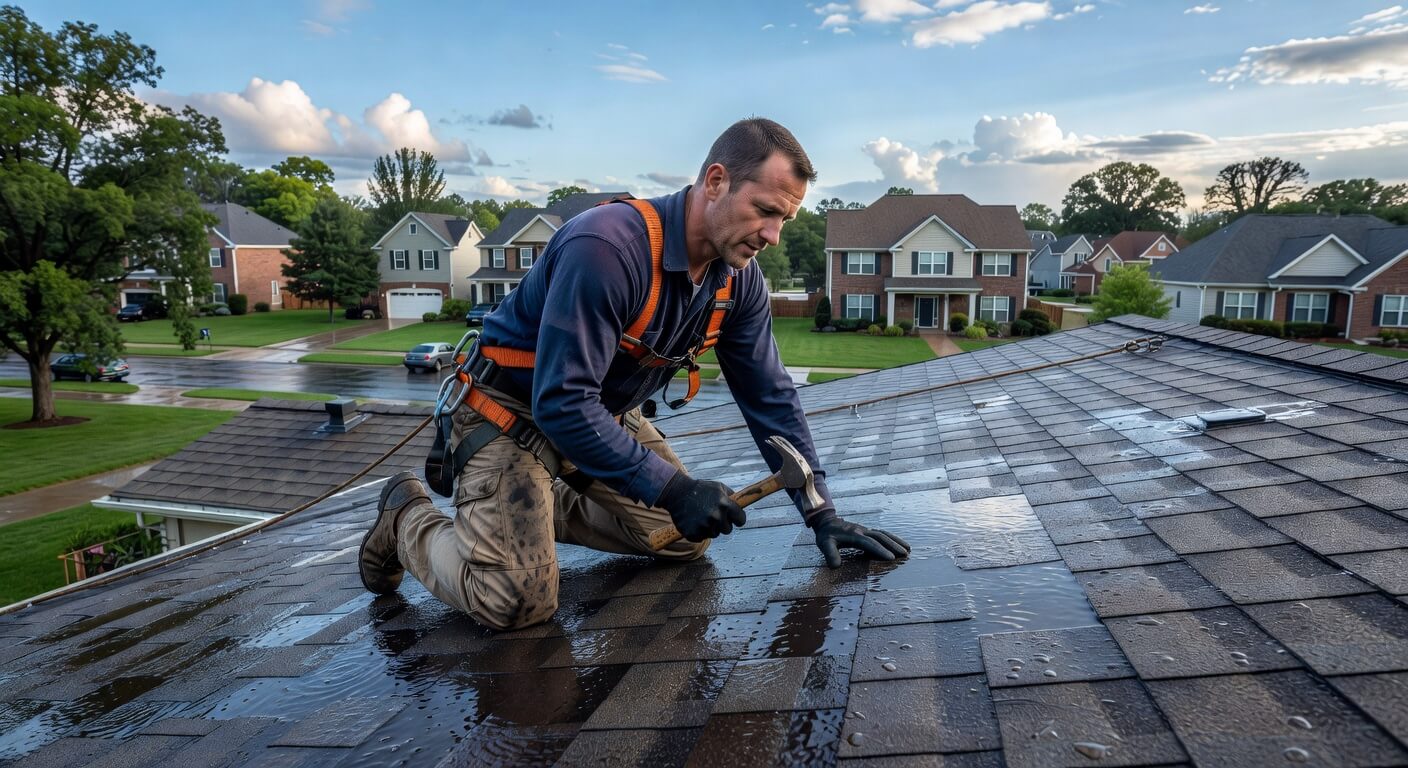
– Discover the common causes of roof leaks after heavy rain and how to identify them effectively.
– Learn practical steps to fix minor leaks and prevent future damage to your home.
– Understand the importance of seeking professional help for extensive repairs and maintenance.
Signs of Roof Leaks After Heavy Rain
It’s essential to recognize the **problematic signs** that indicate a roof is leaking, especially after a heavy downpour. One of the most common indicators is the appearance of **water stains** on ceilings or walls. These stains often vary in color, showing browns, yellows, or even greens, signaling that water has penetrated your roofing material. If you notice these areas inside your home, it could point to leaks originating from the roof.
Another significant warning sign to watch for includes **missing shingles** or damage on the roof’s surface itself. Shingles can become loose or broken due to strong winds or heavy rainfall, which increases the risk of leaks. Inspecting your roof for visible cracks or holes is crucial, as these openings can allow water to seep in. Areas around **chimneys, vents, and skylights** are especially vulnerable and should be examined closely.
Additionally, don’t overlook the importance of checking **gutters and downspouts**. When gutters are clogged, water backs up and can overflow, leading to leaks in your roofing system. If water isn’t directed away from the roof and foundation, it poses a significant risk for water damage. Regular gutter maintenance ensures they remain clear and can effectively manage heavy rain, preventing leaks before they start.
Identifying and Repairing Roof Leaks
After recognizing the signs of leaks, the next step is to thoroughly inspect your roof. Begin by looking for any **visible damage**, such as missing or cracked shingles that may allow water to infiltrate. Pay particular attention to areas where water tends to accumulate because these spots are more prone to leaks. Sometimes, professional assistance might be necessary for a detailed inspection, especially if you’re uncertain about potential issues.
If you detect minor problems, consider taking action to repair them promptly. Small cracks can often be fixed with **roofing sealant** or by replacing a few missing shingles, protecting your home from significant damage later on. For those needing more extensive repairs, reaching out to professionals can provide peace of mind. If you’re looking for reliable assistance, D.L Williams Roofing’s services cover a range of roofing needs, ensuring your roof remains secure and leak-free.
1. Understand the Causes
Research and familiarize yourself with the common issues that cause roof leaks after heavy rain, such as clogged gutters, damaged shingles, or improper installation.
2. Inspect Your Roof
Conduct a thorough visual inspection of your roof, looking for missing shingles, cracks, or holes. Pay attention to areas around chimneys, vents, and skylights.
3. Check the Gutters
Ensure that your gutters are free of debris and are directing water away from your roof and foundation. Clogged gutters can lead to water backup, causing leaks.
4. Look for Water Stains
Inside your home, check ceilings and walls for water stains or discoloration. This can help you identify the location of roof leaks.
5. Repair Minor Damage
If you find any minor issues, such as small cracks or missing shingles, take immediate action to repair them. Use roofing sealant or purchase replacement shingles as necessary.
6. Schedule Professional Assessment
If you suspect more significant issues, contact a professional roofing contractor for a detailed inspection and repair.
7. Implement Regular Maintenance
Establish a routine maintenance schedule to prevent future leaks by cleaning gutters, checking for damage, and addressing small issues promptly.
8. Know When to Replace
Evaluate the age and condition of your roof; if it’s older and suffering from repeated leaks, it may be time to consider a complete replacement to prevent ongoing problems.
Common Mistakes to Avoid During DIY Roofing Repairs
When it comes to handling roofing repairs, many homeowners attempt DIY fixes without fully understanding the task at hand. While taking initiative is commendable, several common mistakes can lead to further issues down the road. By being aware of these errors and how to prevent them, you can avoid costly repairs and maintain a secure roof over your head.
1. Skipping Extensive Inspections
Many people jump straight into repairs without first conducting a thorough inspection. This can lead to missing critical issues, such as hidden leaks or structural damage. To prevent this, always examine your roof carefully, focusing on both the surface and hidden areas, such as around flashing and vents.
2. Neglecting Gutter Maintenance
Failure to clean gutters regularly can result in clogs that lead to water backup and leaks. As debris accumulates, it becomes more challenging for rainwater to flow freely, creating pressure on your roof. Make it a habit to clean your gutters at least twice a year to ensure proper drainage.
3. Using Inappropriate Repair Materials
Some homeowners may use the wrong materials for repairs, thinking they can save money. For instance, patching shingles with general adhesive may not withstand the elements. Always use roofing-specific materials designed for durability to ensure effective repairs.
4. Ignoring Safety Precautions
Attempting roofing repairs without adequate safety measures can lead to serious injuries. Common mistakes include neglecting to wear appropriate footwear or failing to use safety harnesses. Always prioritize safety by wearing the right gear and securing ladders properly when working at heights.
5. Overlooking Minor Issues
Some homeowners may dismiss minor problems as unimportant, only to face bigger issues later. A small crack or a few missing shingles can turn into a significant leak over time. Address these minor issues as soon as you notice them to prevent escalation.
By being mindful of these common mistakes, you can approach DIY roofing effectively and keep your home safe from leaks and associated damages.
Preventing Future Roof Leaks
To avoid roof leaks in the future, it’s crucial to establish a regular maintenance routine. This includes cleaning your gutters and conducting visual inspections to catch problems early. Taking these small steps can greatly reduce the risk of leaks developing during heavy rain.
Additionally, if your roof shows signs of aging or repeated damage, it might be time to consider a replacement. A new roof can provide improved durability and peace of mind against leaks. For expert assistance with roofing solutions, visit D.L Williams Roofing’s storm damage restoration services.


