• Knowing when roof replacement makes sense can help you avoid bigger repairs, water damage, and repeated patch jobs that no longer solve the real issue.
• Key warning signs include an aging roof, missing or curling shingles, leaks inside the home, sagging areas, and repair costs that keep adding up.
• A careful inspection, a look at past repair history, and a comparison between repair and replacement costs can help you make the right decision with confidence.
When It’s Time to Act on Your Roof
A roof rarely fails all at once, but the warning signs can start to build up fast. In Chester, VA, spring weather can bring heavy rain, strong winds, and sudden storms that put added stress on older roofing systems. That is why knowing when roof replacement makes sense can help you avoid bigger repairs later.
Small issues often turn into bigger ones when they are ignored. Missing shingles, repeated leaks, and sagging areas are all signs that the roof may be reaching the end of its useful life. If you wait too long, water can reach the decking, insulation, and even the inside of your home.
We help homeowners make smart decisions before damage spreads. Our team at residential roofing services can inspect the roof, explain what we see, and help you decide what comes next. Acting early can save time, reduce stress, and protect your home from more costly issues.
How We Know a Roof Is No Longer Worth Repairing
A roof repair can solve a small problem, but it is not always the right fix. When damage keeps returning in different areas, or when the roof is old enough that materials are breaking down across the surface, replacement often becomes the smarter choice. In many cases, the cost of repeated patching adds up faster than people expect.
We look at the full condition of the roof, not just one leak or one missing shingle. The age of the roof, the amount of visible wear, and the history of past repairs all matter when deciding whether roof replacement makes sense. If the structure underneath has been affected, a new roof may be the safest and most lasting option.
Step-by-Step Guide
???? Step 1: Check the Roof Age
Start by finding out how old the roof is. Most asphalt roofs begin to wear out after a couple of decades, though weather and upkeep can change that timeline.
???? Step 2: Look for Visible Damage
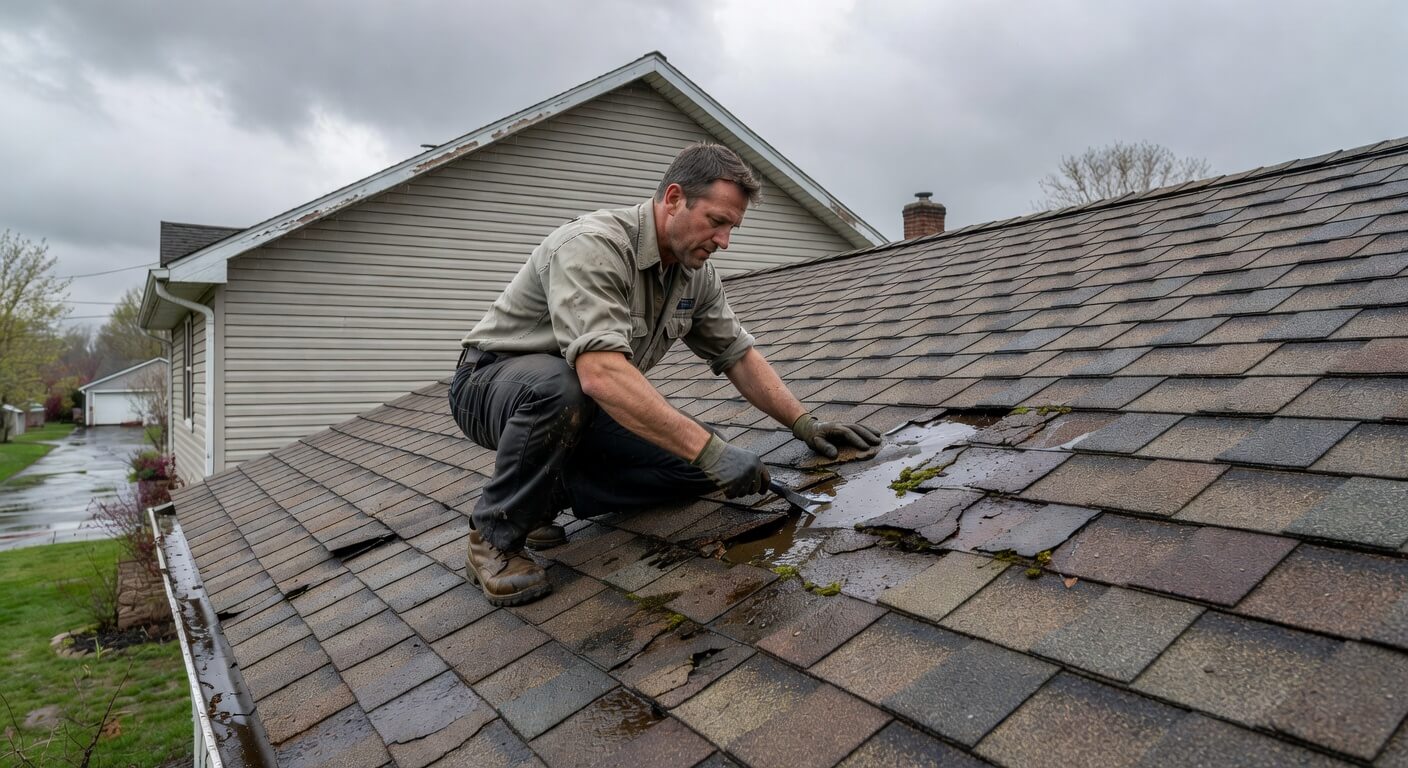
Scan for missing shingles, curling edges, cracked surfaces, or dark spots. These signs often show that the roof is breaking down and may be nearing replacement time.
???? Step 3: Watch for Interior Leaks
Check ceilings, attic spaces, and upper walls for water stains or damp areas. Leaks inside the home often mean the roof has already lost part of its ability to keep water out.
???? Step 4: Inspect the Roof Deck and Structure
A soft or sagging roof can point to deeper damage below the surface. If the decking is weakened, repairs to the outer layer may not be enough.
???? Step 5: Review Past Repair History
Think about how often the roof has needed patching in recent years. If repairs keep coming back in the same spots, replacement may be the better long-term answer.
????️ Step 6: Consider Local Weather Wear
Spring storms in Chester, VA can speed up roof wear through wind, rain, and falling debris. A roof that has taken repeated weather hits may need more than another quick fix.
???? Step 7: Get a Professional Opinion
Have a trained roofer look at the roof as a whole. A professional can tell whether the damage is isolated or if the roof has reached the point where replacement is the safer choice.
✅ Step 8: Compare Repair Costs to Replacement
Add up what repeated repairs have already cost and compare that to a full replacement. If the roof keeps failing and the numbers are close, replacement usually makes more sense.
Common Mistakes to Avoid
Many homeowners try to fix roof problems on their own before understanding the full issue. That can lead to short-term patches that do not solve the real problem. The mistakes below often happen when people only look at the surface damage.
⚠️ Mistake 1: Ignoring the Roof Age
Some people focus only on visible damage and forget to check how old the roof is. This happens because age is easy to overlook when a leak seems small, but older roofs often fail in more than one place. To prevent this, always factor in the roof’s age before deciding on repairs.
❌ Mistake 2: Patching the Same Spot Repeatedly
A common DIY move is fixing the same leak again and again. This usually happens when the real issue is under the shingles or spread across a larger section. Prevent this by looking for patterns in the damage instead of treating each leak as a separate problem.
???? Mistake 3: Skipping the Attic Check
Some homeowners only inspect the outside of the roof and never look inside. That mistake happens because attic damage can be easy to miss, but it often gives early signs of bigger trouble. Prevent it by checking for stains, damp wood, and daylight coming through the roof boards.
⚠️ Mistake 4: Overlooking Structural Soft Spots
People sometimes miss sagging or soft areas because they seem minor at first. This often happens when the surface looks better than the layers underneath, but hidden weakness can mean the roof is no longer safe to repair. Prevent this by looking for dips, soft decking, or areas that feel uneven.
❌ Mistake 5: Choosing Repairs Without Comparing Costs
Many DIY roof fixes are chosen because they seem cheaper right away. The problem is that repeated repairs can cost more over time if the roof is already near the end of its life. Prevent this by comparing the price of continued fixes with the cost of a full replacement.
Frequently Asked Questions
How do I know when roof replacement makes sense?
It makes sense when the roof has old materials, repeated leaks, or damage in several areas. If repairs are becoming frequent and no longer last, replacement is often the better choice.
Can a roof be repaired instead of replaced?
Yes, a roof can often be repaired if the damage is small and limited to one area. If the roof is aging or the problems keep returning, a full replacement may be the smarter option.
What are the most common signs a roof needs replacement?
The most common signs are missing shingles, curled shingles, leaks, sagging spots, and water stains inside the home. These issues often mean the roof is losing its ability to protect the house.
Does spring weather affect roof damage in Chester, VA?
Yes, spring storms can add extra wear through heavy rain, wind, and falling debris. In Chester, VA, that seasonal stress can make older roof problems show up faster.
Is it better to replace a roof before major leaks start?
Yes, it is better to replace a roof before major leaks begin. Acting early can help prevent damage to the attic, ceilings, and walls, which can lead to bigger repair costs.
Final Thoughts on Roof Replacement
Knowing when to move from repair to replacement can protect your home and help you avoid sudden surprises. The key is to look at age, repeated damage, and the full condition of the roof instead of focusing on one small problem. When roof issues keep coming back, a replacement may be the safest and most practical path.
For homeowners in Chester, VA, spring is a good time to check for storm wear and make a plan before summer heat adds more stress. We are here to help you take the next step with confidence and clear answers. follow us on Instagram for more roofing updates


